
Red Light and Infrared Are Not the Same Room

Many commercial operators confuse red light photobiomodulation panels with infrared heat cabins. This mix-up leads to incorrect installations, disappointed clients, and rooms that fail to deliver the promised benefits. Understanding the clear differences between these two treatments is essential for anyone designing or managing wellness spaces. Red light therapy and infrared heat cabins require distinct environments, equipment, and safety measures. This post explains why these rooms are not interchangeable and what to specify for each.
What Photobiomodulation Panels Are and How They Work
Photobiomodulation (PBM) uses specific wavelengths of light, typically between 630 and 850 nanometers, to stimulate cellular processes. These wavelengths fall within the visible red and near-infrared spectrum but are distinct from the heat-producing infrared used in saunas or heat cabins.
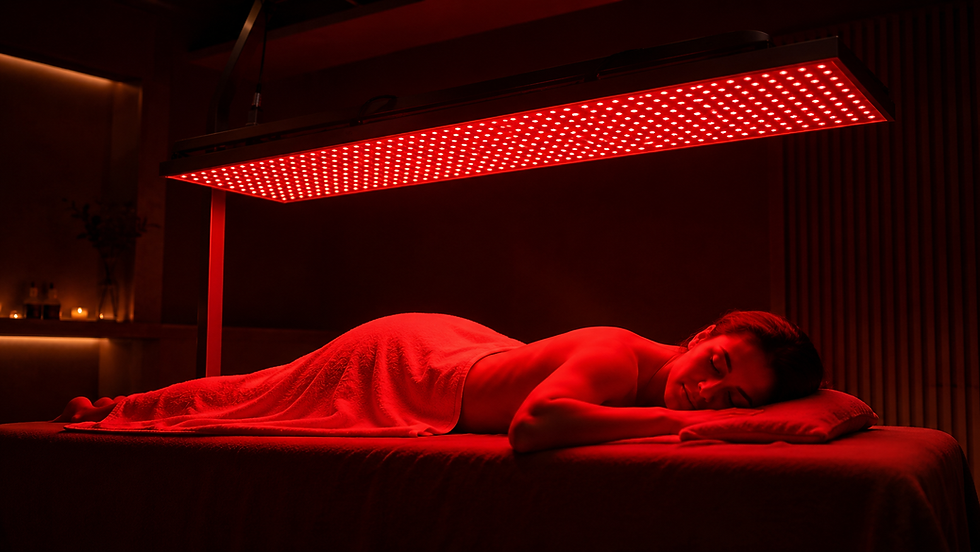
PBM panels deliver low-level light energy that penetrates the skin and supports cellular repair, reduces inflammation, and may improve circulation. The treatment is non-thermal, meaning it does not heat the body or the room significantly. This requires a low-ambient light environment with reflective surfaces to maximize light exposure and safety measures like eye protection for clients.
Key Features of a Photobiomodulation Room
Wavelength range: Approximately 630–850 nm, carefully calibrated for therapeutic effects
Room design: Low ambient light, reflective walls or surfaces to enhance light delivery
Electrical load: Panels require stable, dedicated power sources but generate minimal heat
Safety: Eye protection is mandatory due to the intensity of red and near-infrared light
Client experience: Relaxing, cool environment focused on light exposure without heat
Operators often promise clients the benefits of red light therapy but install infrared cabins or try to combine both in one room. This approach fails because the environment needed for PBM is very different from that of a heat cabin.
How Infrared Heat Cabins Differ
Infrared cabins use far-infrared wavelengths, typically longer than 850 nm, to generate heat that penetrates the skin and muscles. The goal is to raise body temperature, promote sweating, and provide heat therapy benefits like muscle relaxation and detoxification.
Unlike PBM rooms, infrared cabins are insulated spaces designed to retain heat. They require ventilation systems to manage humidity and temperature and benches or seating designed for comfort during heat exposure.
Key Features of an Infrared Heat Cabin
Wavelength range: Far-infrared, usually above 850 nm, focused on heat generation
Room design: Insulated walls, benches for seating, ventilation to control humidity
Heat management: High electrical load to power heaters, temperature controls
Safety: Heat-resistant materials and ventilation to prevent overheating
Client experience: Warm, sauna-like environment focused on heat therapy
Trying to use a single room for both PBM and infrared heat therapy often results in a space that is neither cool enough for effective red light treatment nor warm enough for proper heat therapy.

Why Mixing These Treatments in One Room Fails
Combining photobiomodulation panels and infrared heaters in the same room creates conflicting requirements:
PBM needs low ambient light and reflective surfaces, while infrared cabins require insulation and heat retention
PBM rooms must protect eyes from intense light, but infrared cabins focus on heat comfort without special eye protection
Electrical systems must handle different loads and safety standards for each treatment
Ventilation needs differ: PBM rooms have minimal airflow to maintain light conditions, infrared cabins need active ventilation to manage heat and humidity
Operators who promise both treatments in one space often deliver neither effectively. Clients may receive weak light therapy with uncomfortable heat or a hot sauna room without the benefits of targeted red light wavelengths.
What to Specify for Each Room
To avoid confusion and ensure client satisfaction, specify the following clearly:
For Photobiomodulation Rooms
Use LED panels emitting 630–850 nm wavelengths
Design room with low ambient light and reflective surfaces
Install dedicated electrical circuits for stable power
Provide eye protection for clients
Avoid heat-generating equipment in the same space
For Infrared Heat Cabins
Use far-infrared heaters with wavelengths above 850 nm
Build insulated walls and benches designed for heat comfort
Include ventilation systems to control humidity and temperature
Use heat-resistant materials and safety controls
Avoid bright or reflective surfaces that interfere with heat retention
Operators should treat these as two separate rooms with distinct design and technical requirements.
Verifying Wavelengths and Mechanisms
Scientific studies confirm the therapeutic ranges for photobiomodulation and infrared heat. PBM wavelengths stimulate mitochondrial activity and cellular repair without heating tissue, while far-infrared wavelengths primarily generate heat for muscle relaxation and detoxification.
Before installing equipment or promising results, verify the wavelength specifications from manufacturers and consult research on treatment mechanisms. This ensures the room delivers the intended therapy and meets client expectations.
Final Thoughts
Red light photobiomodulation panels and infrared heat cabins serve different purposes and require different environments. Confusing the two leads to poor results and unhappy clients. Treat these as separate rooms with clear specifications for light wavelengths, room design, safety, and electrical needs.
Operators should avoid combining these treatments in one space. Instead, build dedicated rooms that meet the unique requirements of each therapy. Doing so supports client satisfaction, treatment effectiveness, and long-term success.
For a detailed side-by-side breakdown of what to specify for each room, visit our specification guide.


Comments