
Three Sauna Traditions. One Body. Why the Heat Source Decides the Room.

Saunas are often grouped under one category, but treating them as a single amenity can lead to costly mistakes. Finnish dry saunas, Russian banyas, and Turkish hamams all share the goal of heat therapy, yet each tradition demands a unique room design. Operators who overlook these differences risk building a space that cannot deliver the authentic experience their guests expect.
Finnish Sauna: Dry Heat and Wood
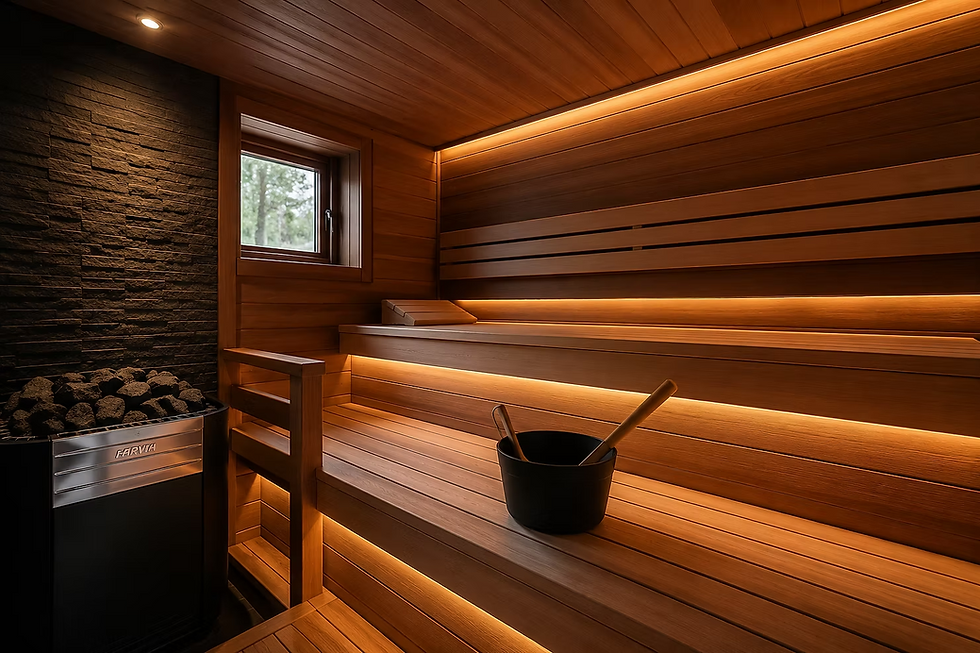
The Finnish sauna is the most recognized sauna style worldwide. It uses dry heat generated by a wood or electric stove heating stones. The room is lined with softwood, typically spruce or cedar, which handles the low humidity and high temperatures well. Ventilation is moderate to maintain oxygen flow without cooling the room too quickly.
Key design elements include:
Wood walls and benches that absorb and release heat gently
Moderate ventilation to keep air fresh but dry
Drainage designed for occasional water thrown on stones (löyly) to create steam
Bench tiering with multiple levels for temperature variation
Research from the University of Eastern Finland, including studies by Laukkanen et al., links regular Finnish sauna use to cardiovascular benefits. This tradition’s dry heat and controlled humidity are essential to those health effects.
Russian Banya: Steam and Intense Humidity
The Russian banya shares some similarities with the Finnish sauna but uses steam more aggressively. Water is poured over heated stones to create thick, hot steam called löyly. This requires a room built to handle high humidity and moisture.
Design must include:
Wood walls resistant to moisture, often linden or birch
Higher ventilation rates to manage humidity and prevent mold
Drainage systems capable of handling heavy water use
Bench tiering that supports social bathing and steam circulation
The banya’s intense steam and humidity create a different heat experience than the Finnish sauna. Operators who try to retrofit a Finnish sauna shell for a banya often face moisture damage and ventilation problems.

Turkish Hamam: Radiant Heat and Marble
The Turkish hamam is a steam bath but differs from the banya by using radiant heat from heated marble surfaces rather than a stove with stones. The room is tiled or clad in marble, which absorbs and radiates heat evenly.
Important design features include:
Marble or stone walls and benches that store and radiate heat
High humidity environment with continuous steam generation
Specialized drainage to handle constant water flow
Ventilation designed to maintain steam without excessive air exchange
The hamam’s radiant heat and moisture require a completely different build than wood-lined saunas. Attempting to convert a Finnish sauna or banya room into a hamam will not work without major reconstruction.

Why Tradition Must Guide Design
Each sauna tradition demands specific materials, ventilation, moisture control, drainage, and bench layout. These elements are not interchangeable. Choosing the heat source and tradition first ensures the room supports the authentic experience and longevity.
Operators who treat “sauna” as a checkbox often discover too late that their space cannot support the tradition they want. The Finnish sauna’s dry wood room cannot handle the moisture of a banya or the radiant marble of a hamam. Planning the tradition before construction saves time, money, and guest disappointment.
For a detailed comparison of materials, ventilation, and drainage requirements for these three traditions, visit the full build comparison on our blog.


Comments